Archeopolis - Living Heritage Center
Rome, Italy — Spring 2026
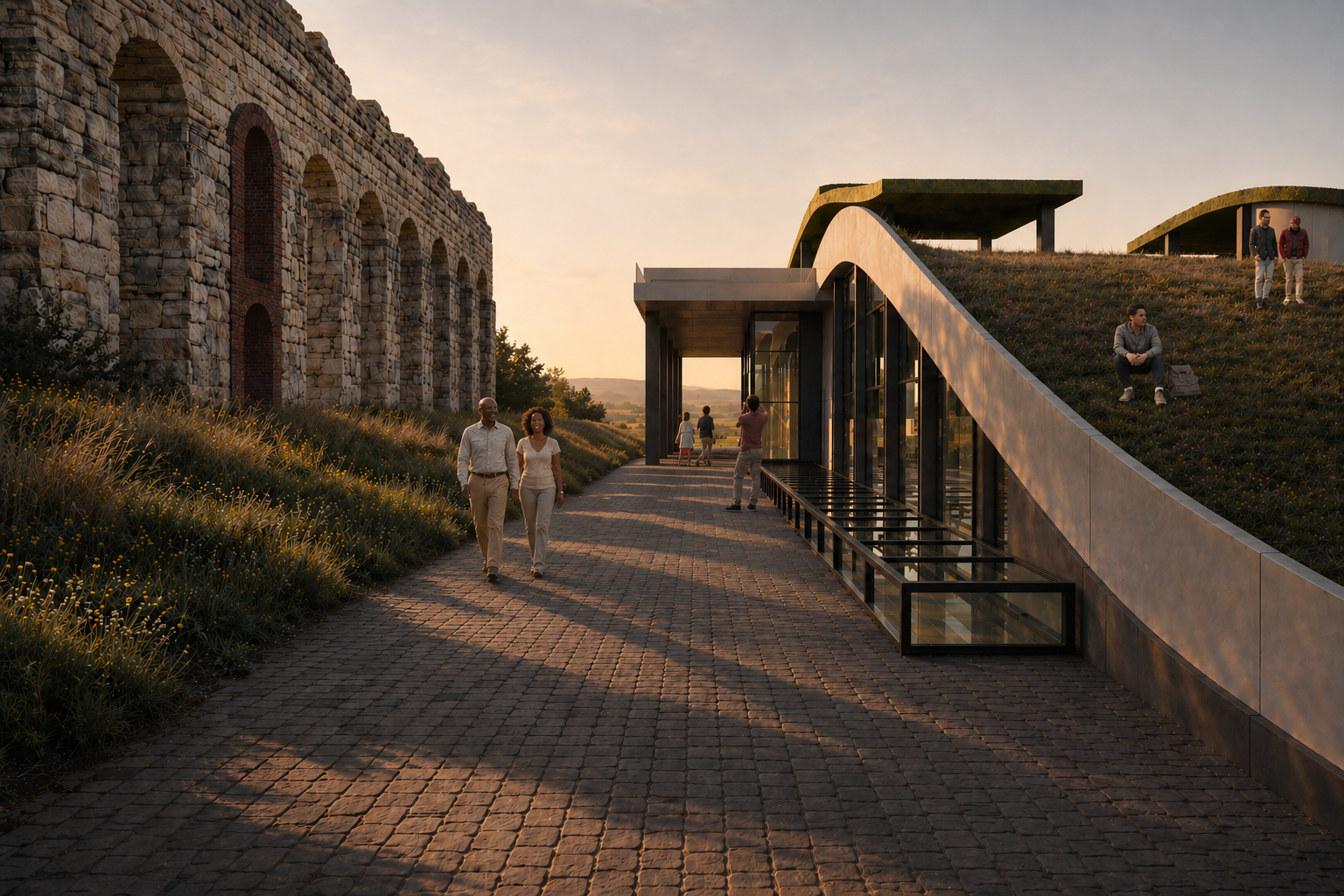
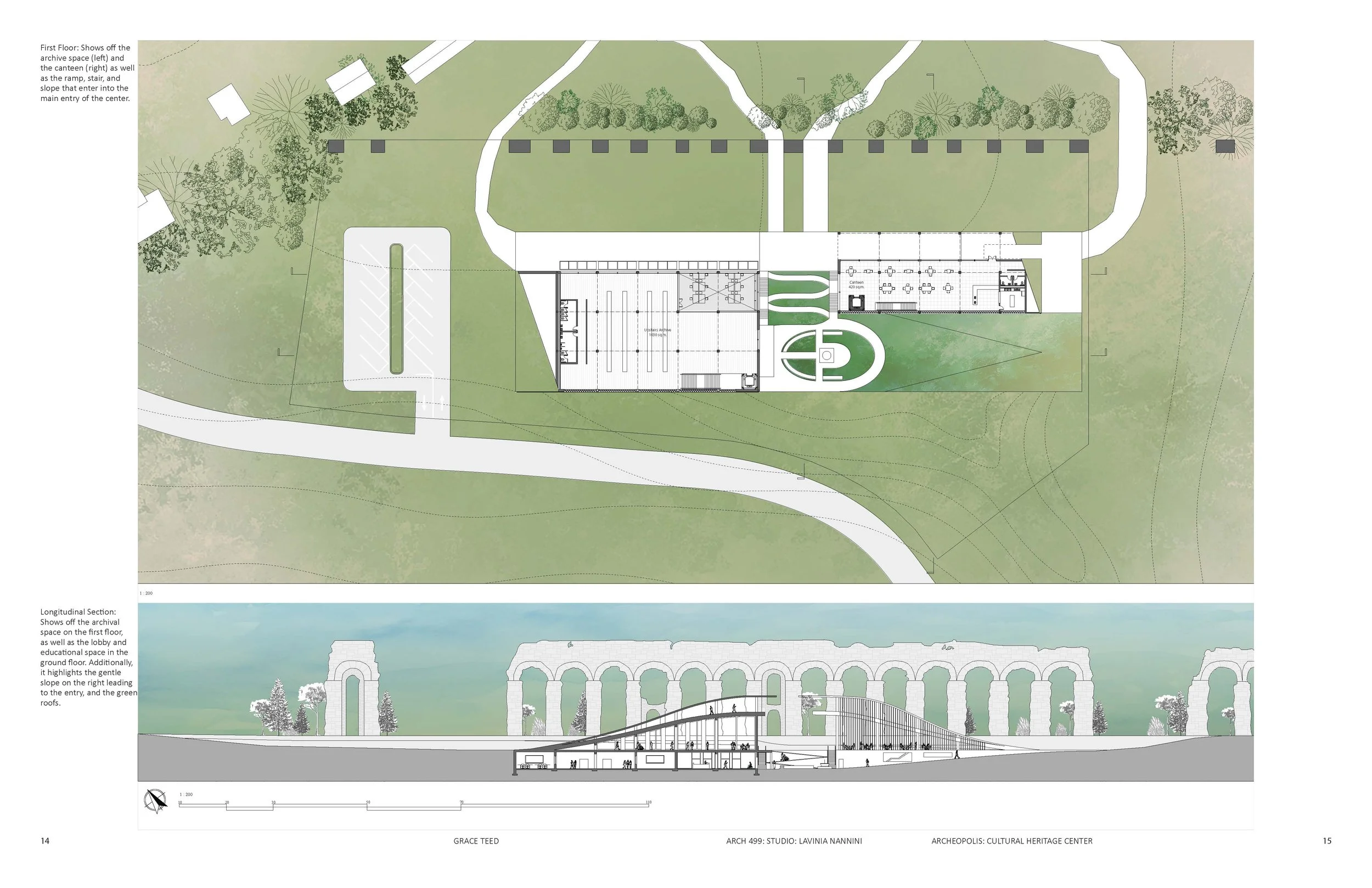
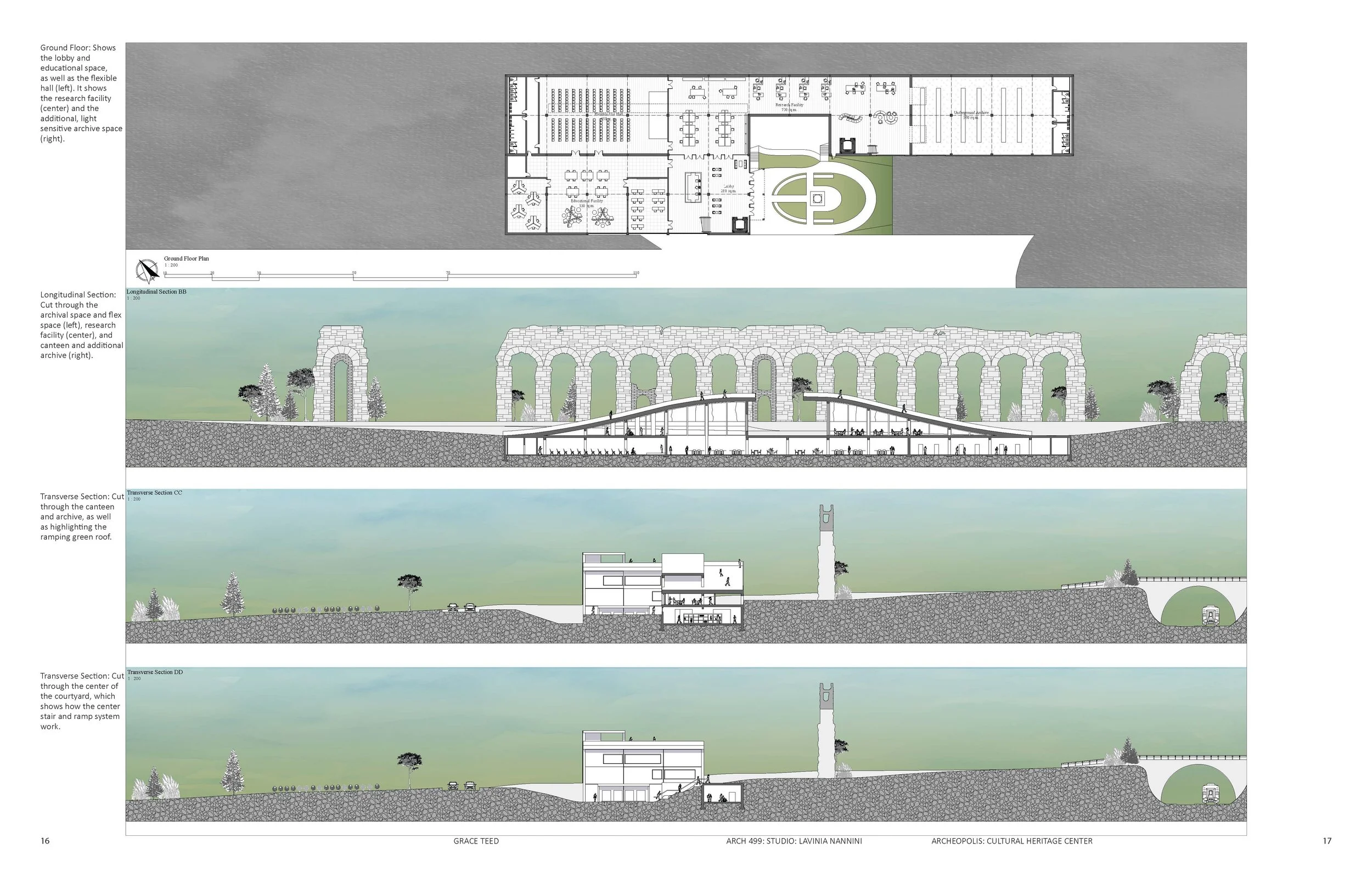
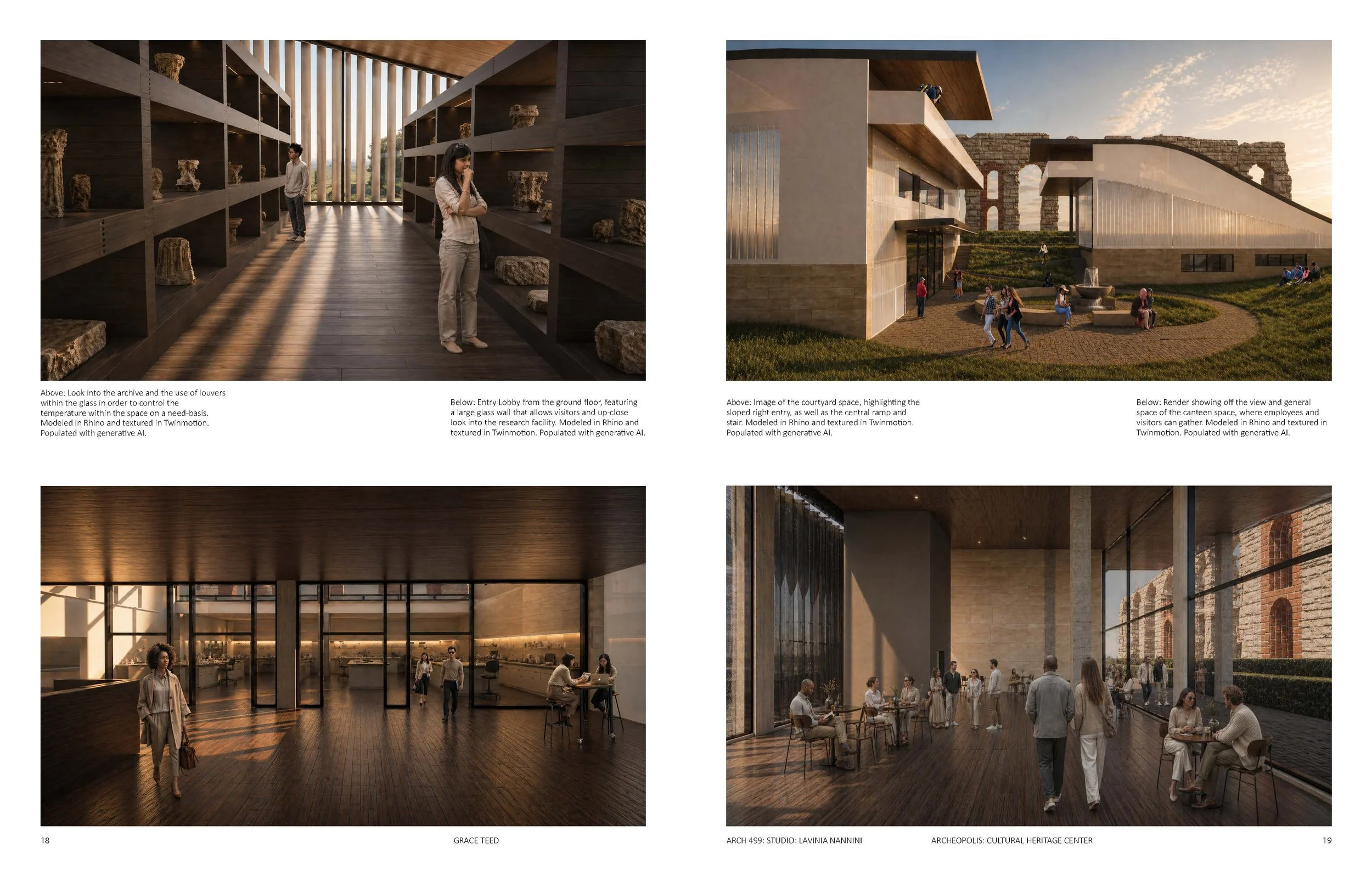
The Living Heritage Center was designed as a facility for storing and restoring historical artifacts, while also allowing visitors to appreciate the history and longevity of both the artifacts and the site itself. Developed during my semester studying abroad in Rome, the project challenged students to exist in tandem with the Aqua Claudia without overpowering or compromising the artifact’s views and historical significance. My design aimed to highlight the aqueduct from as many vantage points as possible. By sloping the roofs and lowering the entrance, I created new perspectives that frame and emphasize the Aqua Claudia throughout the site.
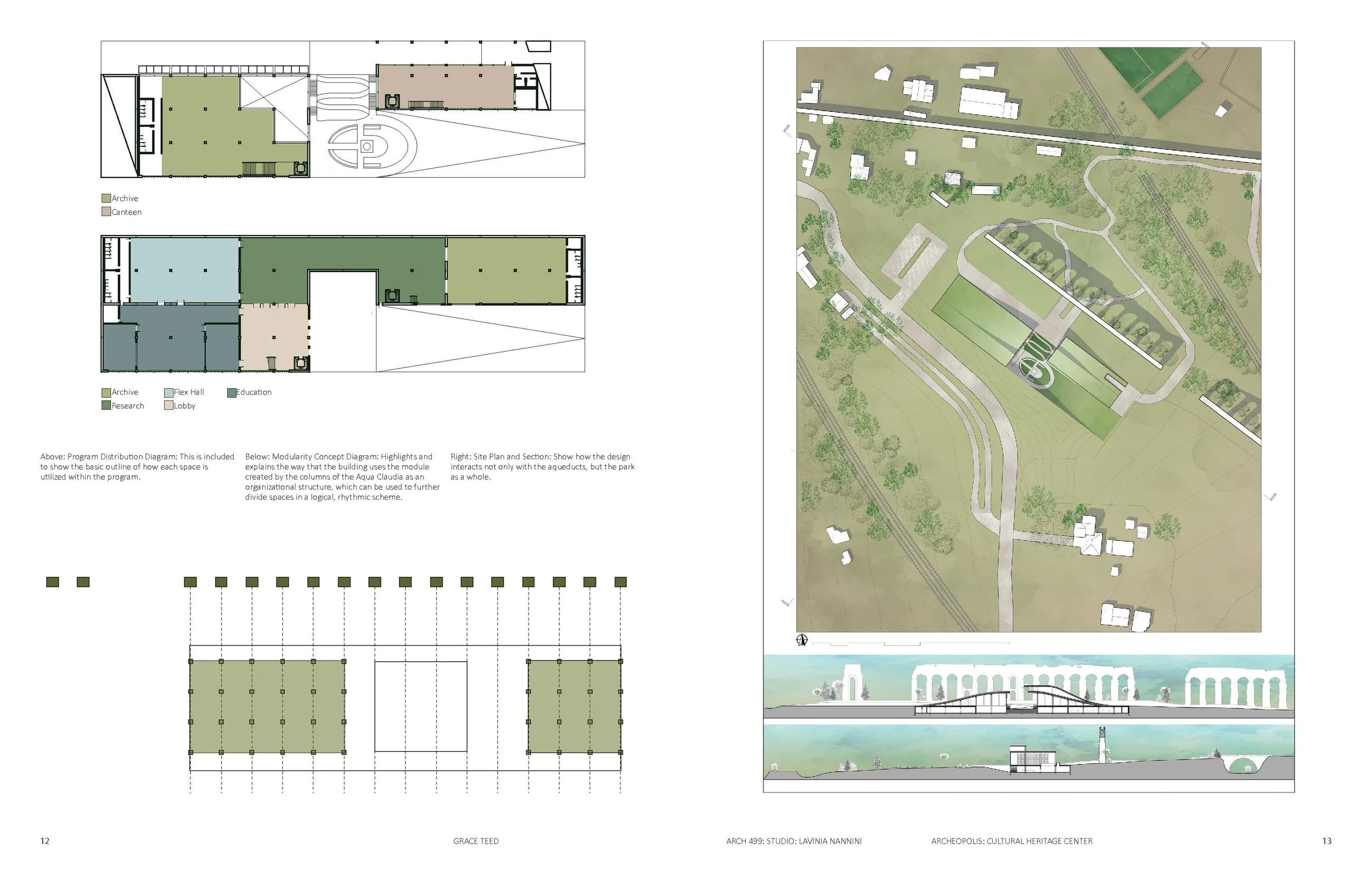
The building is constructed from steel using a strict column grid. It includes large viewing galleries, multiple gathering spaces, a café, and a basement dedicated to preservation and experimentation. A gentle slope at the front leads visitors into the courtyard, encouraging them to move through and experience the site in its entirety.
My primary focus was designing a building that complemented the existing aqueduct, maintained a logical plan, and met the needs of both visitors and the scientists working within the facility. During the project, our professors also encouraged us to incorporate AI into our renderings, emphasizing that AI is an important part of the future of architectural representation and design. I feel that the strongest aspects of the project are its sections and elevations, which clearly communicate the sloping roof and entrance while highlighting the variety of viewpoints created throughout the site.